The beauty industry is enjoying a colour explosion
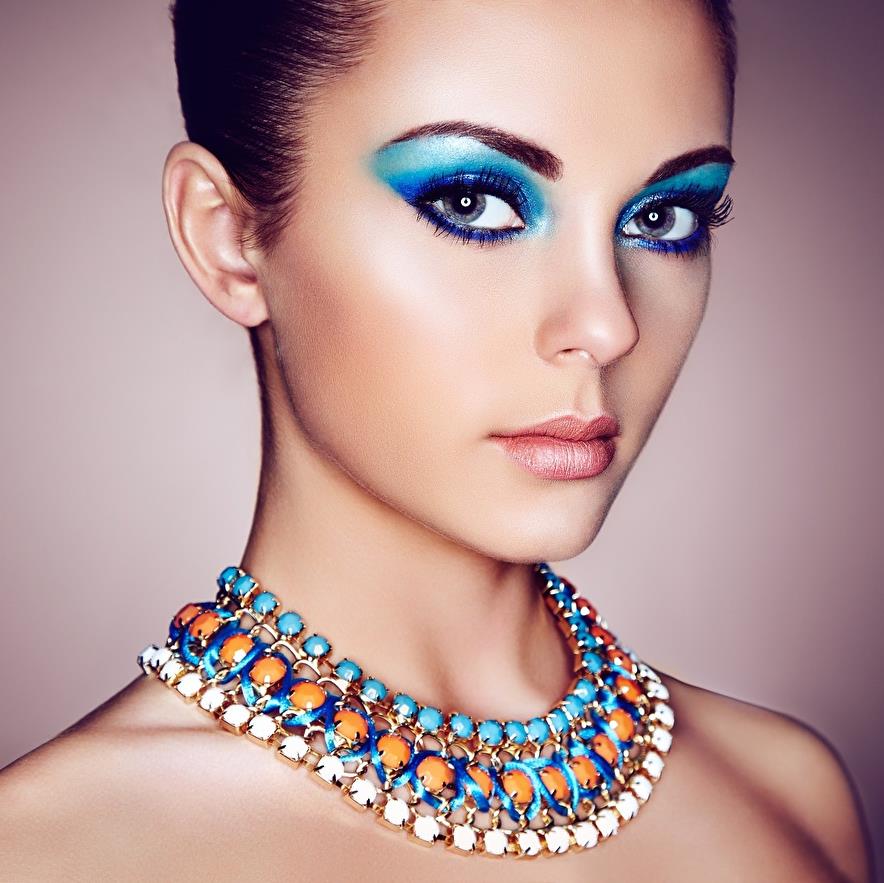
Glossy, matte, nude or natural... contoured, bright or baked; the colour cosmetics market has evolved into a multi-product, multi-effect, multi-billion dollar industry.
Over the past five years, the market has exploded with new products and formats, as technology and routes to market become ever more sophisticated, driving consumer demand and the sector's visibility on the global beauty stage.
According to market research provider Euromonitor International, the global colour cosmetics market grew by a healthy 7% in 2017 with a further compound annual growth rate (CAGR) of 4% expected over the next five years, compared with just 2% between 2012 and 2017.
Growth was strong in both mature and emerging geographical markets. Mintel estimates sales in the top five markets reached a combined US$47bn in 2017, while Euromonitor has identified exceptionally strong growth in Latin America and Eastern Europe, along with China and India.
"The market is definitely growing," says Kloe Angelopoulou, Research Analyst at Euromonitor International. "Regions like Eastern Europe and Latin America are showing strong growth, at 14% and 10% respectively, while Mexico and Argentina were also big growth engines with growth rates high at 11% and 30%, respectively."
Greater dynamism, fuelled by a slew of new make-up brands entering the market, as well as the continued interest in individual make-up categories has driven this renaissance in colour cosmetics sales.
Angelopoulou explains that this popularity is particularly strong within eyebrow make-up and lipsticks, and premium blushers, bronzers and highlighters, where sales have skyrocketed.
"Lipsticks and the blusher/bronzer/highlighter sector both showed strong growth in 2017 at 12% and 8%, particularly in markets such as the UK, the US and Asia Pacific where the natural look and glowing skin is popular," she explains. "Western markets are also adopting more 'editorial' looks with cat's eye eyeliner, bushy brows and freckles."
Social media is at the heart of celebrity make-up lines’ marketing; Rihanna’s Fenty Beauty has racked up more than 4 million followers on Instagram since its launch last year
Colour disruptors and social stars
Of the brands creating headlines both in print and online, colour start-ups have arguably been the most influential, disrupting the industry status quo with game-changing products and innovative marketing campaigns, which have increasingly become the target for acquisition and investment by multinationals and private equity groups over the past 12 months.
Private equity group TPG Capital bought a minority stake in Anastasia Beverley Hills, while BlueGem acquired Instagram native brand Iconic London and cruelty-free vegan brand Lime Crime was snapped up by Tengram Capital Partners.
On the investment front, L'Oréal backed unisex start-up Jecca, founded by make-up artist and LGBTQ advocate Jessica Blacker.
The brand, which puts a focus on being 'inclusive', uses the hashtag #makeuphasnogender and was created after Blacker, who initially started offering makeover sessions to transgender women, heard clients frequently sharing how overlooked they felt by mainstream beauty brands.
Flesh, created by Allure Founding Editor Linda Wells under the Revlon umbrella, shares a similar ethos to Jecca, featuring an 89-sku line-up of foundations that cater to an inclusive array of skin tones.
Along with brands like Fenty Beauty, CoverGirl and ColourPop, Flesh has helped establish a new industry standard of minimum 40-shade foundation ranges, as well as encouraging conversation around the subject of shade inclusivity.
The one characteristic these brands all share is their commitment to putting social media at the heart of their marketing, in some cases with brands launching online before being tapped by retailers. This approach has allowed them to penetrate the market faster.
Pop and film star Rihanna's Fenty Beauty, for instance, has racked up more than 4 million followers on Instagram since its launch last year, while fellow celebrity colour brand Kylie Cosmetics, created by Kylie Jenner, eclipses even the most established luxury brands with 100 million followers across Instagram and Snapchat, all gleaned in the three years since the brand launched.
"Social media is a massive influence right now especially when you consider it is the number one source of information for younger consumers," explains Sarah Jindal, Senior Global Analyst, Innovation and Insights, Beauty & Personal Care at Mintel.
"It has made application techniques and looks so accessible for everyone, so consumers are less afraid to try. Whether looking for something new or for tips or tricks, YouTube and Instagram are where people are going."
It's little wonder then that other personalities, particularly in the world of celebrity, have been quick to take their slice of the colour cosmetics pie.
Jenner's sister, Kim Kardashian West, launched KKW, her namesake cosmetics brand, which saw its first drop of products – around 300,000 Contour & Highlight kits – sell out in under three hours of launching, generating almost $14.4m in sales.
Kardashian West, along with a group of influential friends and family, promoted the launch on social media ahead of it going live, creating a hype and conversion rate that more established legacy brands could only wish for.
And actress Bella Thorne's newly launched brand, Filthy Fangs, saw its debut products – two eyeshadow palettes – sell out within a few hours of launching, despite their relatively premium price point (£40-47).
The collection looks set to expand after Thorne posted an Instagram tease discussing lip colour. There are also high hopes for the colour line that Lady Gaga reportedly plans to launch under the brand name Haus Beauty, which will undoubtedly be supported by a heavy social media presence.
"Social media is helping these brands attract a wider audience at lower costs, while consumers have easier and faster access to brands that they can purchase more conveniently online," explains Angelopoulou.
"Consumers, particularly millennials and Gen Z, are more likely to purchase a brand that they can identify with, so a brand's success increasingly rests on its ability to constantly engage with customers on social, because consumers want to feel like products are customised to their preferences."
For those influencers and celebrities looking for a slightly safer entry to market, a one-drop collaboration, increasingly in the form of an eye or lip palette, has become an increasingly popular trend.
From Kylie Cosmetics to MAC and even UK reality TV series Love Island, the palette has become a sell-out item for brands and retailers, and a ubiquitous part of any make-up bag, particularly among younger consumers.
"Gen Zers in particular are looking to express themselves through make-up and a variety of colours and playful names that allow them to pick a look that best fits their personality or mood," adds Angelopoulou.
The boom in vegan beauty is one of the biggest trends of the last year with Mintel reporting its product share rising globally from 6.4% in 2016 to 9.8% in 2017
The V factor
The boom in vegan beauty is one of the biggest trends of the last year with Mintel reporting its product share rising globally from 6.4% in 2016 to 9.8% in 2017, and soaring to 13% in the January to June period this year.
"Consumers view vegan products, rightly or wrongly, as 'natural+', proving a higher grade of purity and ethics, and brands have been quick to spot the shift and label their products accordingly," explains Vivienne Rudd, Director of Global Innovation and Insight, Beauty & Personal Care at Mintel.
This growth has been largely driven by the wider wellness lifestyle trend and the rise in popularity of free-from and vegan diets, but there is an increasing awareness among consumers of the link between traceability and what we put on our bodies.
"Consumers not only investigate ingredients and efficacy, they want to know about traceability and how animal-friendly they are," says Helen Duxbury, Senior Account Manager at NPD UK Beauty. "Having a clear stance on these ethical issues can provide a valuable boost to sales."
Developments in formulations and ingredient availability within the wider natural and organic trend have meant that the colour cosmetics sector has been in a strong position to tap into the demand for vegan beauty.
"Creating colour cosmetics in a natural way used to be quite difficult," explains Mintel's Jindal. "The pigments weren't strong enough, the textures weren't quite right, but that has changed and now there are so many brands that have figured out the right ingredients and formulations to make stand-out products that can hold their own against the mainstream brands."
Unsurprisingly, brands with an existing commitment to sustainability and natural and organic beauty have been the first to fully embrace vegan make-up as the claims are often interchangeable.
UK brand Lush entered the colour market for the first time with Slap Stick Foundation, a 100% vegan base containing 45% coconut oil that is also claimed to reduce plastic packaging waste. Each foundation is housed in a wax 'egg', which can be peeled away to reveal the product inside.
The brand has taken its sustainable credentials one step further with the launch of a set of five Glow Sticks: vegan highlighters that are formulated without plastic glitter.
The Organic Pharmacy, meanwhile, has relaunched its colour line with new plant-based certified organic formulations, products and packaging.
The ten-sku 'phytopharmaceutical' vegan range includes: Hydrating Foundation containing hyaluronic acid, shea butter and stem cells; Tinted Beauty Cream, which adapts to all skin shades; Volumising Mascara, containing a turmeric growth serum to help lengthen and condition lashes; Sheer Glow Liquid Blush; Hydrating Bronzer; and a Balm Gloss to help plump and hydrate lips.
"I am proud to say this line has been years in the making, and no other lab in the world could make it to the standards that I wanted to achieve," explains Margo Marrone, founder of The Organic Pharmacy.
"This was the only way for me to make and deliver exceptional products that would pass certified organic regulations while delivering high-performance make-up results."
Mainstream brands are also tapping into the vegan trend. Kat Von D Beauty is reformulating its entire colour cosmetics line to ensure that it is vegan, adding a section to its website where consumers can view existing products that are free from animal by-products, while Superdrug's new B. beauty vegan range, which includes an extensive colour line-up, took centre stage at the retailer's first vegan pop up store in London earlier this year. And Milk's new Kush mascara is said to be fully vegan, and contains a volumising formula featuring cannabis oil to condition.
Recent high-profile base launches include Charlotte Tilbury’s Magic Away liquid concealer and Easy Bake Loose Powders from Huda Beauty
All about the base
According to NPD Group, 2018 has been characterised by a move away from the strongly contoured look inspired by social media towards a softer, more natural look, where the focus is more towards a flawless, no make-up finish that puts the complexion front and centre.
Key growth areas, says NPD, include primers and highlighters, both showing double-digit growth, while foundation, described by the analyst as a "core sector", showed an uptick of 3%.
"Skin is in and that is absolutely an influence from Korea," confirms Jindal. "Consumers are looking for something that looks more natural and lived-in with the emphasis very much on the skin. The Korean influence is evident in foundation textures, which continue to evolve with more skin-like finishes."
US-based Kosås' new Tinted Face Oil is one such example. Described as a hybrid of skin care and colour, it combines a 'feather-light' medium coverage foundation with nourishing elixir oil, containing six botanicals that are said to minimise pores, even skin tone and blur imperfections.
Oil textures have also been a focus for Urban Decay. Its new Drop Shot Hydrating Mix-In Oil can be used with foundation to create a soft, dewy, natural glow to skin, according to the brand, while Giorgio Armani's Maestro Fusion Makeup features a part oil, part pigment formulation available in 17 shades.
BECCA's new foundation focus, Skin Love, also follows the natural finish trend and includes Weightless Blur Foundation, said to create a velvety, natural finish on skin that mimics the look of smooth, healthy skin.
The Skin Love collection also includes Glow Elixir, a lightweight serum designed for use before foundation application, and containing a proprietary blend of natural ingredients to help brighten, nourish and hydrate the skin, and Glow Glaze Stick, a highlighting balm containing the brand's Glow Nectar Brightening Complex.
Not forgetting male consumers, Chanel hopes to recruit a new wave of customers to the natural look with its new make-up range Boy de Chanel.
The collection, which comprises an edited line of skin perfecting, soft blur foundations, eyebrow pencils and lip balms, is slated to launch in Korea in November – the range is fronted by South Korean actor Lee Dong-Wook – before rolling out internationally in January 2019.
The soft blur finish has also been a focus for Benefit, whose new foundation launch Hello Happy claims to even out skin tone and blur imperfections with soft focus blurring spheres.
The result, the brand says, is a natural finish that looks like skin. And moving from beauty tool arena into the world of product, Beautyblender has entered the sector with Bounce, its first foundation.
2018 has been characterised by a move away from the strongly contoured look inspired by social media towards a softer, more natural look
Developed with what it describes as a "first to market high speed HyperWhip process", the ultra light formula contains hyaluronic acid and white birch extract to create a perfect, flawless canvas on the skin.
Charlotte Tilbury has also focused on the base with her Complexion Collection. The new line is said to create a flawless canvas for further make-up application with its star product being Magic Away, a creamy liquid full coverage concealer with sponge applicator that Tilbury says will help to reduce the appearance of dark circles, pigmentation, redness, blemishes and imperfections.
The formula contains Persian silk tree bark extract that is said to stretch over the complexion to 'resurface' skin, as well as wrinkle-blurring palmitoyl glycine to help give skin bounce and vitality.
Tilbury has also launched Charlotte's Genius Magic Powder, a light-diffusing loose powder for use under the eyes to help boost radiance, while perfecting and mattifying the skin.
Similarly, Huda Beauty has launched a collection of Easy Bake Loose Powders, which promise to create a long lasting flawless finish and utilise the world-recognised method of baking that made founder Huda Kattan an internet sensation.
Demand for a more natural make-up finish and a certain royal wedding this year have also given rise to the resurgence in the popularity of freckles. "Freckles are back in, which strengthens what we are seeing with the natural beauty trend," explains Jindal.
Whether the 'Markle sparkle' has had any influence over the interest in freckles, this still remains a fairly niche area.
Lottie London has developed a range of temporary glitter freckle tattoos that are claimed to add instant glam, while US-based Freck is said to create realistic, buildable freckles by painting on the wash-off formula.
With the natural look firmly on the make-up agenda, how can the colour cosmetics market find ways to diversify to keep sales buoyant? Jindal believes the next area to watch will be eyes.
"Eyelashes and mascara are definitely having a moment, and seem to be taking over for brows," she forecasts. Similarly, Euromontor's Angelopoulou believes new technology will bring focus onto the lash sector: "Chanel is in the process of releasing a new 3D printed mascara, which is quite interesting since mascara is a category that has been struggling since the advent of social media put a focus on the lips due to their visual appeal, and also as false lash treatments have become more popular and affordable."
Investment and new R&D in this area, along with the sector as a whole is certainly something the market could benefit from to ensure colour cosmetics remains a significant player in the C&T sector.
©Cosmetics Business